


A vase or a lampshade allows you to see a material in a different light than in the form of granules or a sample. Its texture, shades, and appearance take on a whole new dimension when the object is printed and placed in a real-world setting.
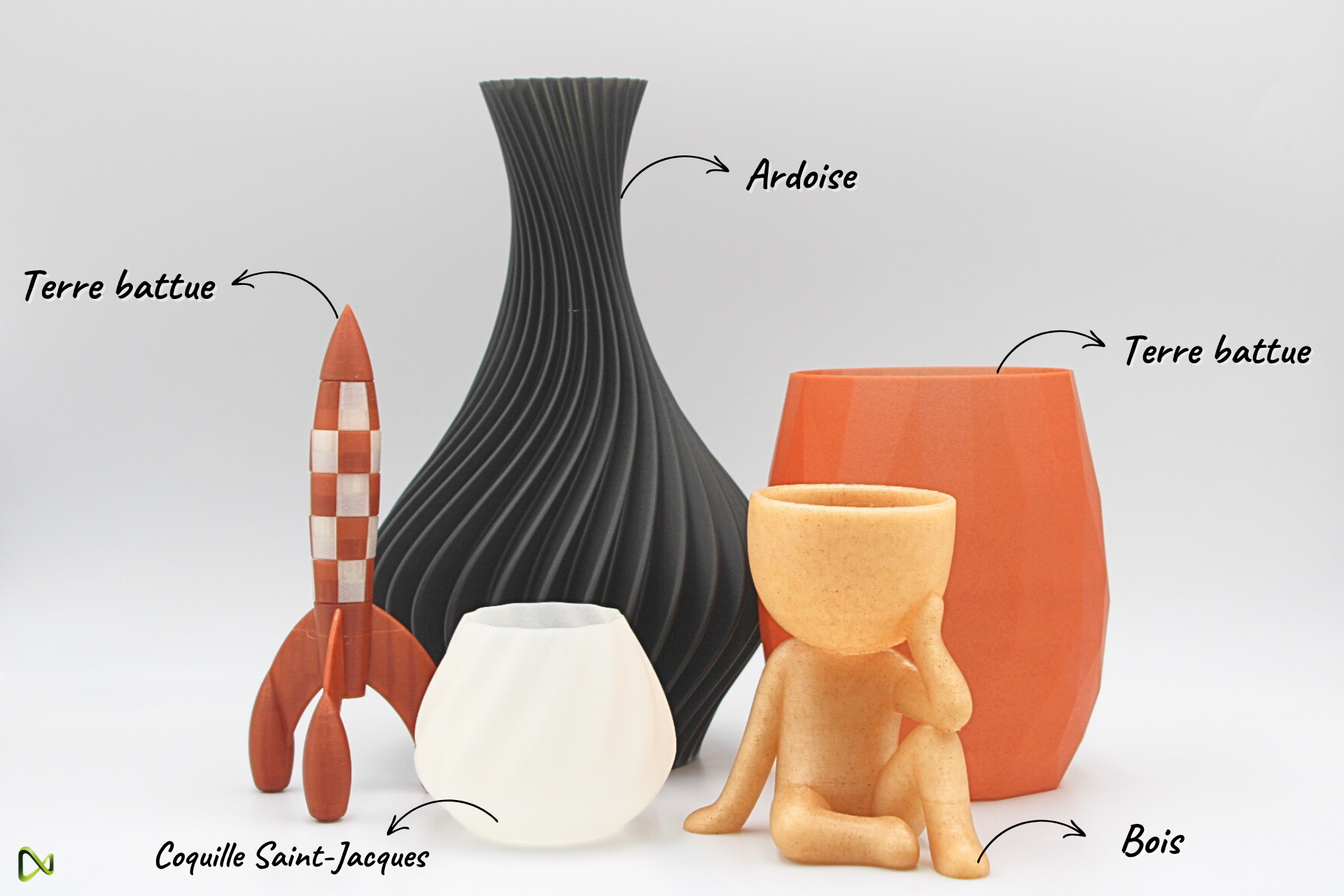
At NaturePlast, we have developed prototypes of 3D-printed vases and lampshades made from biobased plastics that incorporate by-products. These creations demonstrate the potential of our formulations while exploring their applications in the field of interior design.
Incorporating by-products into our materials
By-products from agricultural, agri-food, or marine activities can be incorporated into plastics. Coffee, grains, and seashells are among the resources that can be explored. Their use requires preparation and formulation.
Depending on their characteristics and the intended application, by-products may be ground, micronized, and/or screened before being incorporated into a pure material. The choice of polymer, the nature of the by-product, and its proportion allow for control over the appearance and properties of the resulting material.
The goal is to develop a formulation tailored to the processing constraints and the intended use.
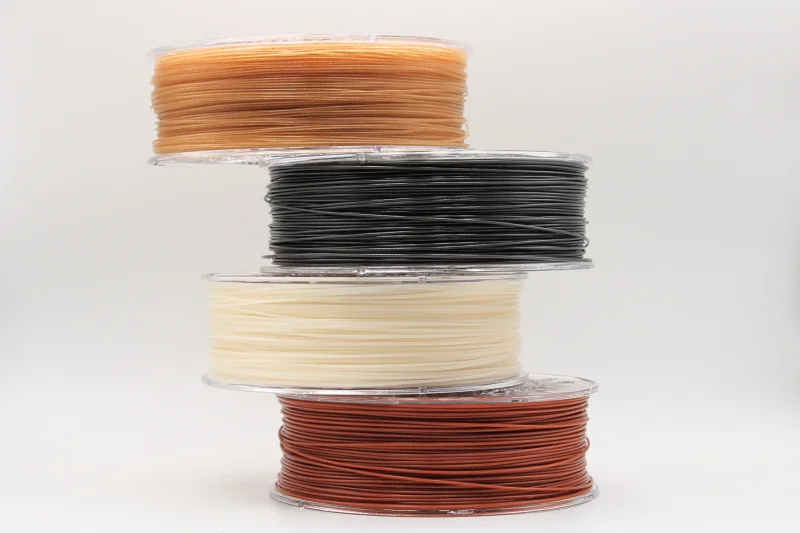
PLA, a 100% biobased plastic suitable for 3D printing
PLA (polylactic acid) is one of the most widely used plastics in 3D printing. Its ease of use makes it possible to produce parts with precise details and a high-quality finish. It is also biodegradable under the specific conditions of industrial composting, at controlled temperatures and humidity levels.
3D Printing to Explore Shapes and Finishes
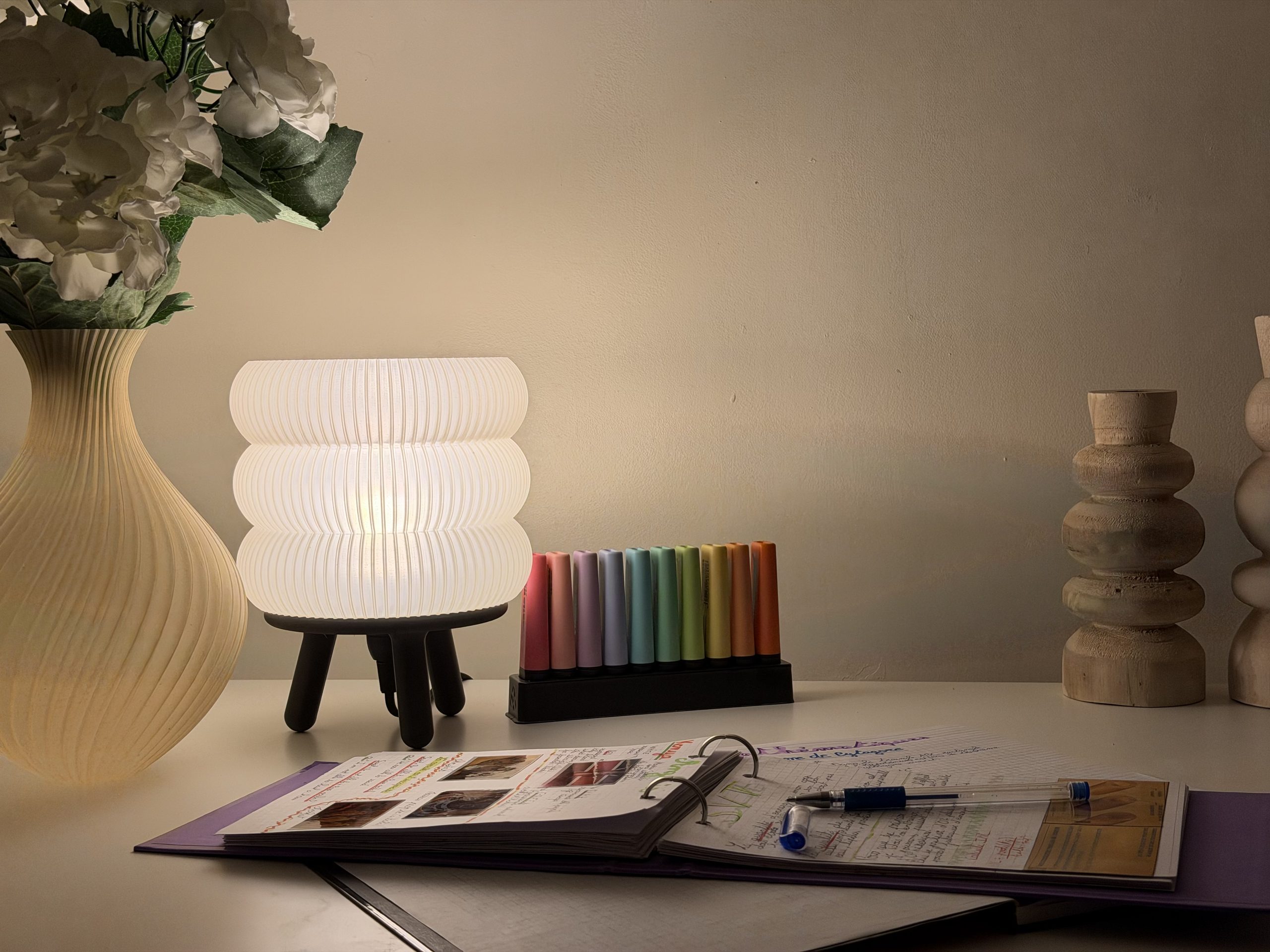
3D printing then makes it possible to move from the formulation to a physical object.
Layered manufacturing and the incorporation of by-products contribute to the appearance of the parts. Close-up photographs reveal their details: print lines, by-product inclusions, and the by-product’s texture.
With these prototypes, the formulations take the form of familiar objects. A bouquet in a vase or a lit lamp allow you to appreciate the result beyond just a sample: the proportions, the texture, and how the object fits into an interior.
See the prototypes in action
The incorporated by-products contribute to this finish. Their inclusions and subtle variations are visible on the printed pieces, with an appearance that varies depending on the chosen formulation and shape.
A 3D-Printed Honorary Award for the EPOPEA Convention
This expertise also extends to the creation of items for events. On the occasion of the EPOPEA annual convention in Caen, NaturePlast created the Honorary Award trophy using 3D printing, made from materials incorporating coffee grounds and scallop shells.
This project combines the development of materials that incorporate by-products with the creation of an object designed for a specific occasion. It illustrates another application of our work.
For more information: https://www.linkedin.com/feed/update/urn:li:activity:7518936788531478528
Prototypes to support future projects
These projects are prototypes designed to showcase our expertise and spark discussions about new applications.
They enable designers, manufacturers, and project leaders to envision the use of biobased plastics that incorporate by-products. Each project then requires adapting the material to the manufacturing process, the desired finish, and the object’s specifications.
Are you interested in exploring the incorporation of a by-product into a plastic material or developing a formulation for 3D printing? The NaturePlast team is here to assist you with your project.